(This piece also appeared on BMWBLOG on October 14th, 2025. You can check it out here.)
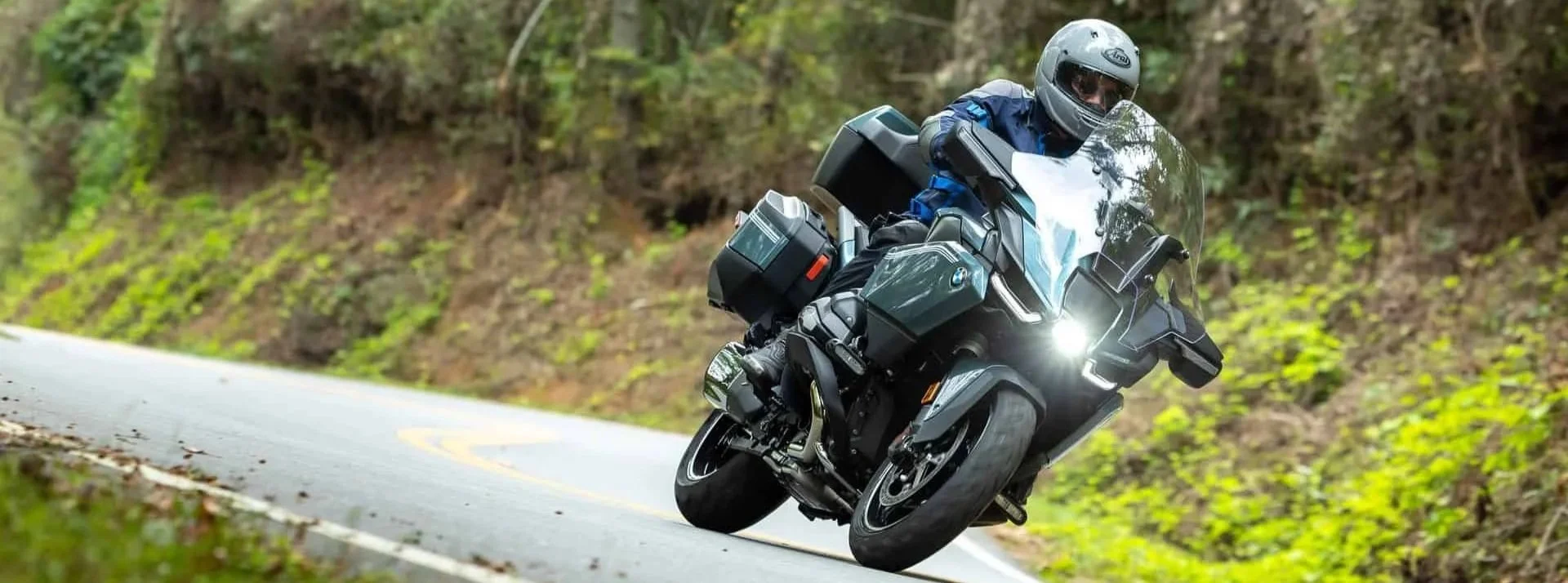
While throwing my leg over the new 2026 BMW R 1300 RT, I recalled a conversation from a couple of years back. Shortly after spending a month with a BMW K1600GTL, I found myself in a BBQ spot in Tyler, Texas. Halfway through my brisket, a guy pulled in on a BMW R 1250 RT, a sport-tourer with a spunky boxer engine, but not the sublime inline-6 of the K-bike. He grabbed the table next to me, and I immediately asked him how he liked his RT.
“It’s such a great machine and goes about as hard as I ever want to and is pretty plush on my old backside.” (Note: He didn’t say “backside,” but this is a family blog.) I asked him what he thought of the K 1600 and if he’d had a chance to ride it. “Oh man, that’s one sweet engine, but you know, it’s just too heavy of a machine for me. I love how I can just toss the RT around.”
BMW had arranged for a group of the motoring press to spend a few days riding the new RT down from Greenville, South Carolina, to Birmingham, Alabama, culminating in BMW Motorrad Days Americas 2025, at the Barber Vintage Festival held at the Barber Motorsports Park….with a whole lot of fabulous roads in between. Louisiana might bill itself as “Sportsman’s Paradise,” but the roads in North Georgia and Northern Alabama could easily lay claim to “Sports-Touring Paradise.” Would the new RT prove a worthwhile heir to my Texas friend’s earlier bike?
The R 1300 RT represents a significant evolution in the Motorrad’s touring motorcycle lineup, and slots into a product space that’s somewhat ignored or deemphasized by its competitors; that of the Sports-Touring motorcycle. Interestingly, the Motorrad’s own market research finds few natural competitors, since the bulk of buyers have gravitated more and more towards the ADV market, which in turn has spawned more road-focused iterations of those beefy all-rounders. (Though the Japanese OEMs seem more interested in the category than the Europeans.) For BMW’s competition, today’s Honda VFRs and Ducati ST3s tend to start life more upright and with knobbier tires.
The Most Powerful Boxer Engine Ever
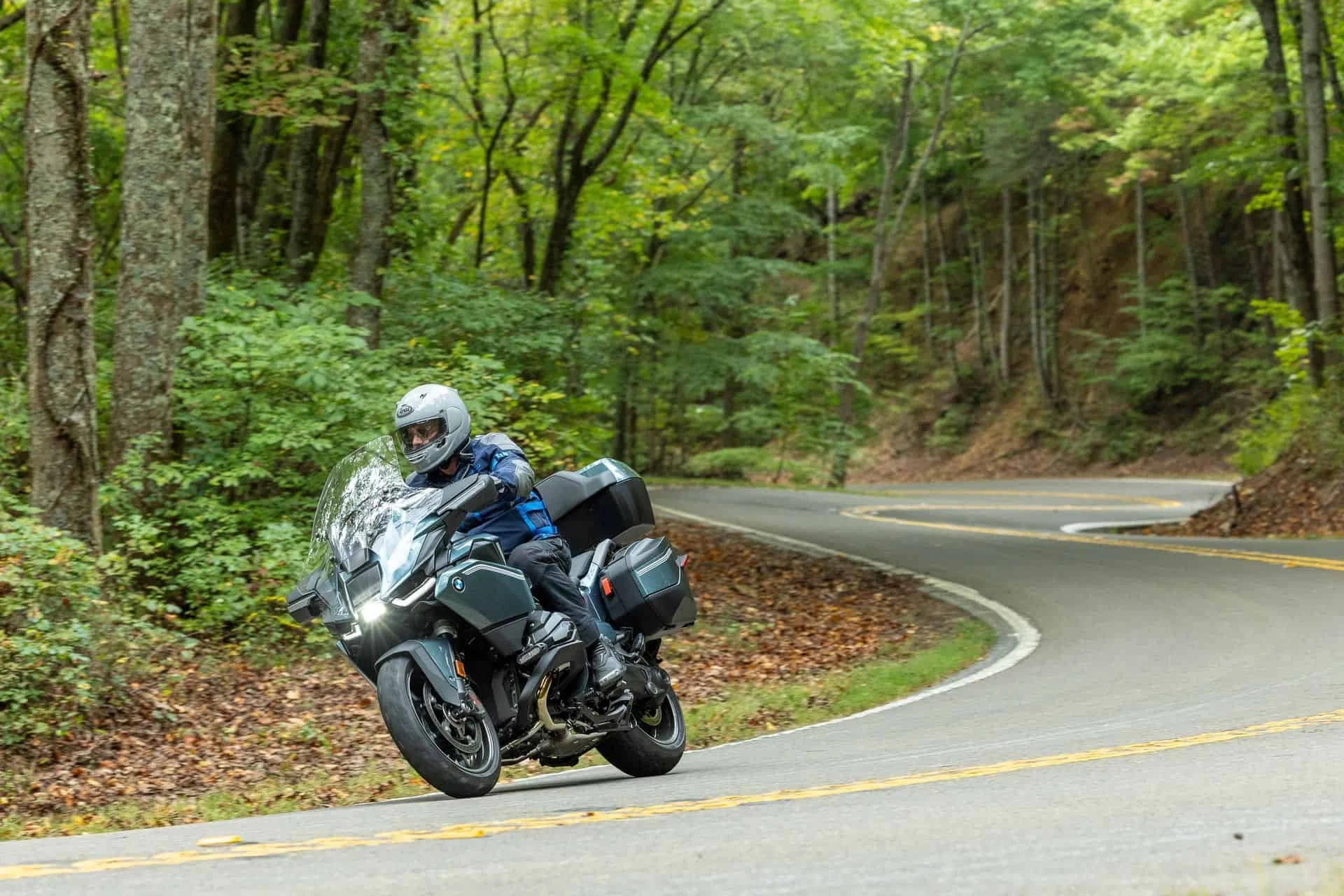
At the heart of the R 1300 RT is a newly developed 1300cc liquid-cooled boxer engine, which it shares with the new R 1300 GS and GS Adventure. The new motor delivers 145hp (versus 136hp for its predecessor) and 110 lb-ft of torque (versus 105 lb-ft), with more torque and smoothness across the rev range (and improved fuel economy) thanks to ShiftCam variable valve timing. It’s smooth, quiet, linear, and powerfully dramatic in all the best ways. Both my wrist and backside would assert this is the best BMW boxer engine yet, and the public seems to agree.
At our second-night hotel, a guy approached our group of bikes parked out front with a dreamy look in his eyes. “I rode a rented GS [one of the new 1300s] down the coast of Spain this summer with a buddy,” he reminisced. “Man,” he said, “incredible bike. If my wife dies before me, that’s the first thing I’m gonna get myself!” He didn’t seem to be kidding.
The compact 6-speed gearbox and clutch, now located withing the engine housing itself, has a reduced overall length, concentrating mass toward the center of gravity for better maneuverability. The shortened transmission shaft also results in notable weight savings, with the new engine’s powertrain weighing 14.3-lbs less than the unit in the previous motor.
A Chassis with Sporting Pretensions
The all-new steel and aluminum chassis offers improved rigidity and more compact packaging than before. Suspension upgrades include the new EVO Telelever front and EVO Paralever rear systems, which provide enhanced steering precision and stability.
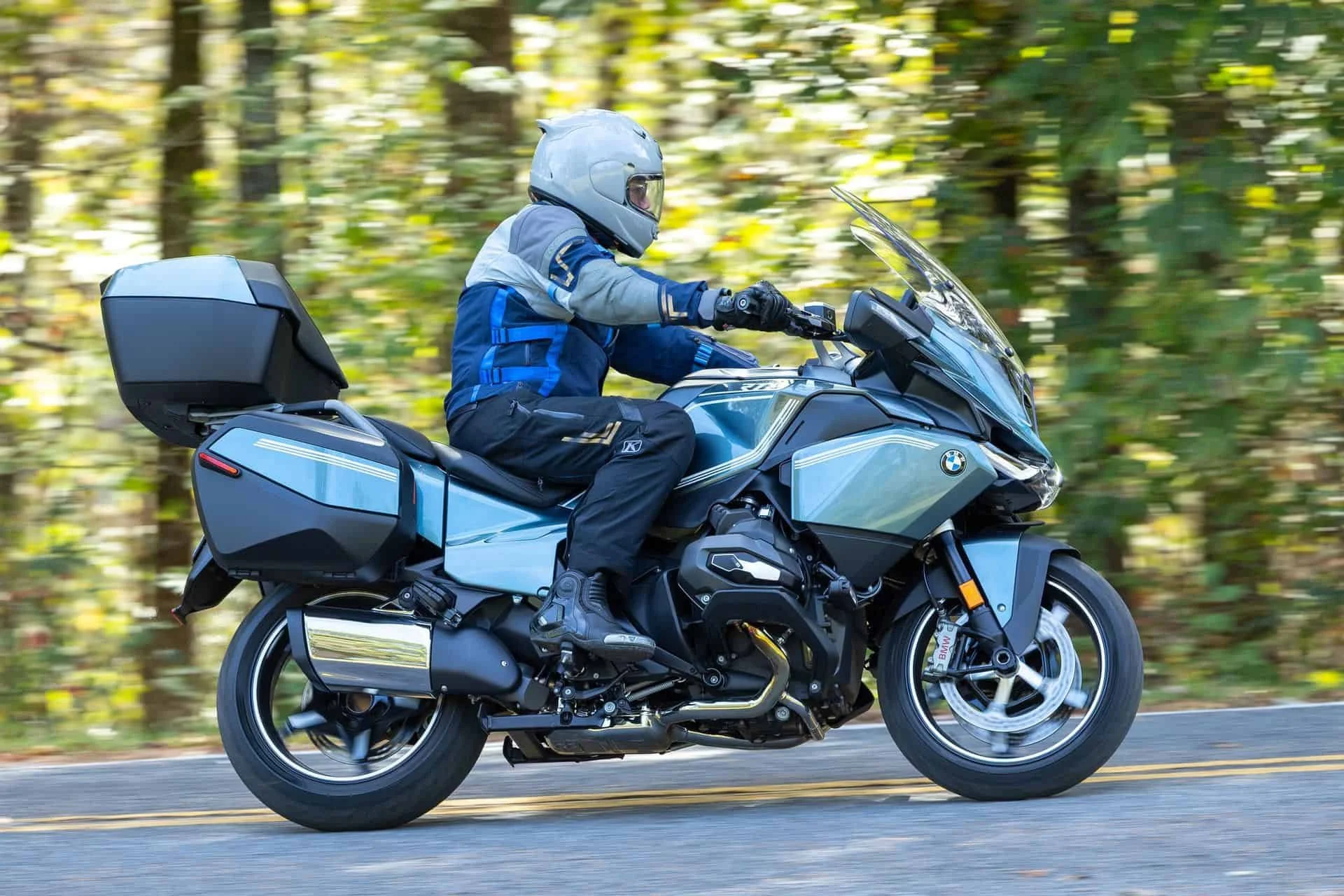
BMW introduced the Telelever over 30 years ago and has been refining it ever since, the Porsche 911 of motorcycle suspensions, if you will. This latest iteration merges the advantages of prior versions—such as brake pitch compensation and the separation of spring and steering functions—while improving rigidity and steering precision. The design features a handlebar decoupling system, centered on a flexible stainless-steel plate that transmits steering forces without causing unwanted tilting. The upper fork bridge is mounted to both pivot and rotate to greatly enhance stability, while an additional roller bearing in the lower fork bridge reduces friction for more precise steering. The suspension includes electronic damping and spring rate adjustment, with a front travel of 5.9 inches, providing greater ride stability and control. As with all Telelever-equipped BMW’s, the RT’s steering is precise, stable and confidence-inspiring.
At the rear, the EVO Paralever is electronically adjustable for rebound and compression, as well as spring rate and preload. Rear travel is 6.2 inches.
Riding our curvy, snaking route provided every manner of tarmac and terrain to test out the new RT’s handling, from fast sweepers to mid-speed cambered curves to 15-mph switchbacks where speed-limit signs weren’t kidding. (We even had an actual snake make an appearance in the middle of the hot road as we went zooming by.)
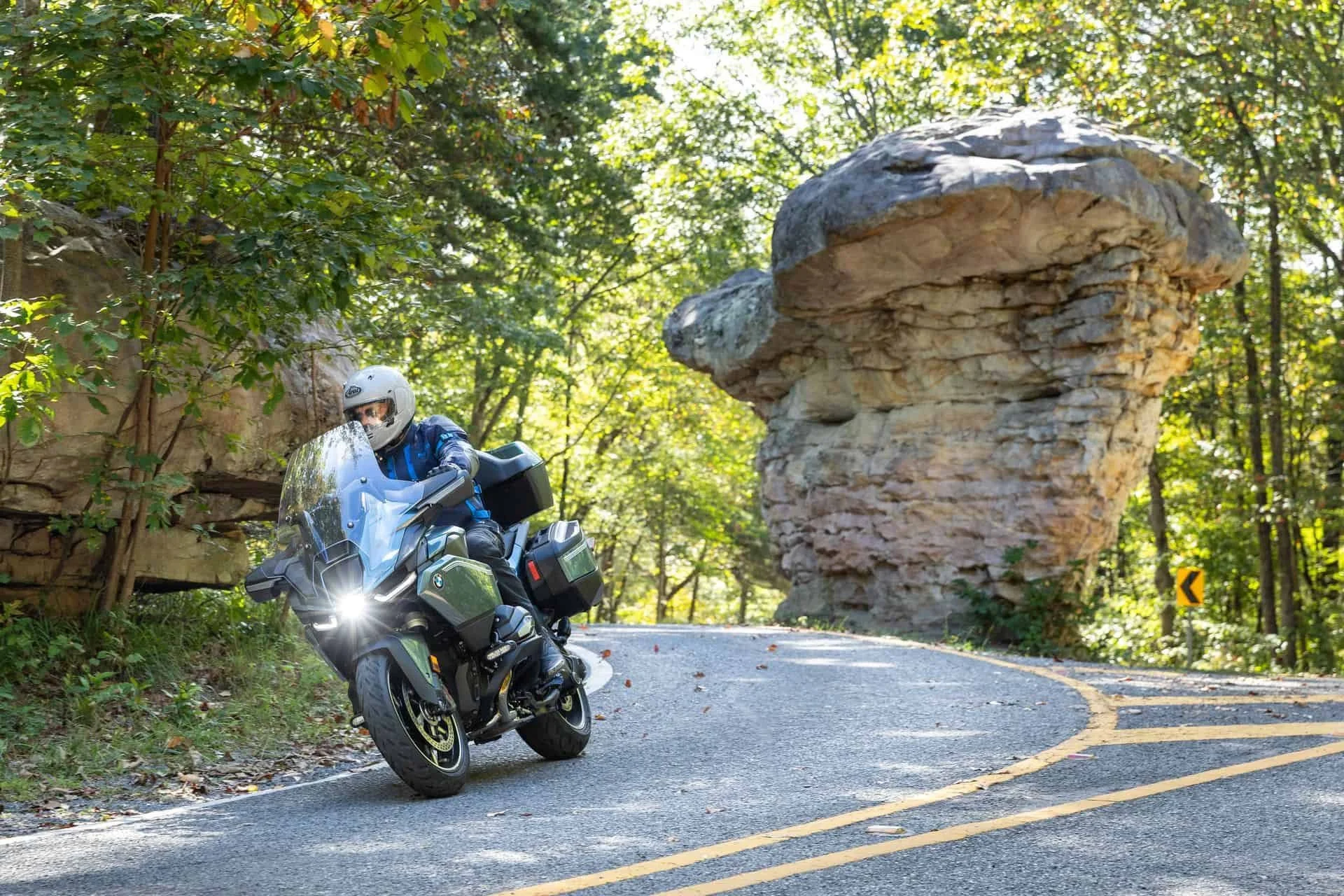
The roads around Helen, Georgia, have the feel of an extended Tail of the Dragon, and from the cars and bikes playing on that stretch, the word is clearly out. From leather-clad riders on Ducatis riding a serious pace, to local squids in jeans riding Gixxers like they stole them, to even one Harley-riding hero who left a trail of sparks as his bags and pegs dragged the ground, bikes aplenty enjoyed the glorious challenge on offer. The RT felt right at home, it’s playful, sprightly nature never being overmatched by the terrain. And the bike’s distinctive looks perked up even the most motorcycle-jaded local.
One such colorful gent glided up on an e-bike while we were stopped for lunch, wearing a fisherman’s cap and sucking on a Dum-Dum. “You from California? Welcome to the United States!” Was he talking to me, I wondered, or the motorcycle?
Seeing our row of bikes lined up in his North Georgia town, all with California distributor plates, he’d made the not unreasonable assumption that we were perhaps not from around these parts. I thanked him for his welcome. “Nice bikes!” he hollered over his shoulder as he gave a big smile and peddled on down the sidewalk.
Maximum Suspension Adjustability and Rider Aids
The optional Dynamic Chassis Adjustment (DCA) offers three standard riding modes—RAIN, ROAD, and ECO—as well as optional DYNAMIC and DYNAMIC PRO modes, allowing riders to switch between plush touring and more spirited riding on the fly. As with many trick semi-automatic suspensions, I quickly landed on the DYNAMIC setting and just left it alone. (Though I did spend a few nail-biting miles plodding along in ECO mode when fuel became an unexpected issue.)
A new feature taking nifty advantage of the suspension’s electronic adjustability is a “Prop-Up Aid” which makes it easier to manage the vehicle on the center stand. When the center stand is lowered, the bike’s suspension lifts itself up to assist putting the bike on the stand. Handy. You’ll likely want to use this feature, as the side stand itself is noticeably short, leaning the bike over at an angle that makes it a challenge to remount in certain situations (making every day “leg day”). For shorter riders, this is could be a particular annoyance.
ASA: Wherefore Art Thou Clutch Lever?
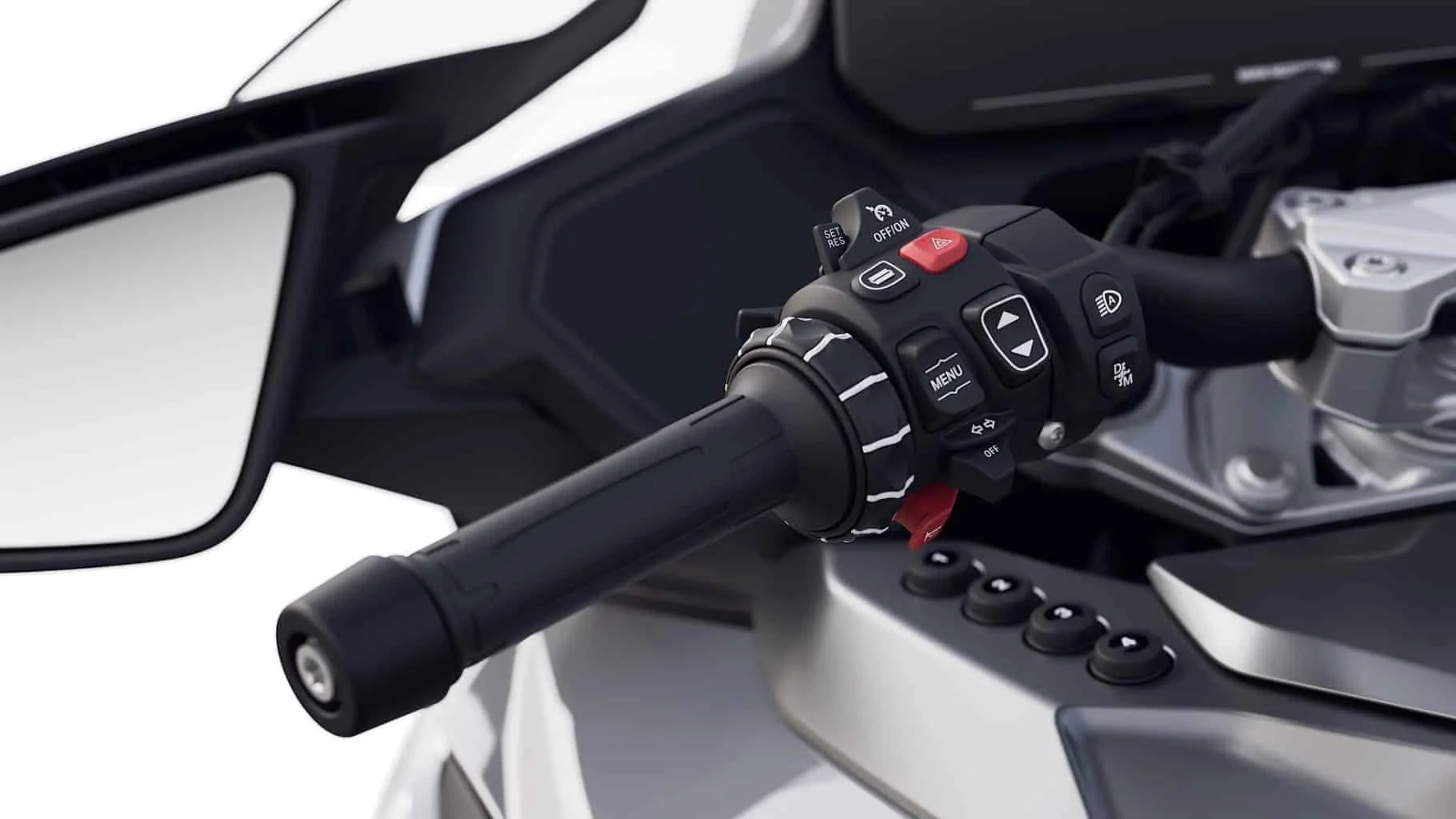
My bike (and indeed all of our test bikes, reflecting the Motorrad’s desire to get the word out) was equipped with the Automatic Shift Assistant (ASA), which automates clutch operation and gear changes. If you’ve ever ridden a motorcycle with automated up-and-down quick shifting, you’ll immediately get the idea, the notable difference being that…there’s no clutch lever. There are two modes: Automatic and Manual. In Auto, the bike handles all the shifting. The rider just twists the throttle and the bike moves off, changing gears up and down as riding style and conditions warrant. In Manual, the rider shifts up and down as normal using the foot lever, determining the rev range at which the engine works, and allows more granular control over engine breaking and shift points. Of interest is that in either mode, it’s functionally impossible to stall the engine.
Now here I have to admit something: I wanted to hate this system. I’m a committed manual transmission guy, as evidenced by the three manual transmission cars I own (two of them newer). On a motorcycle, I’ve always felt the interplay between the clutch lever and the throttle was one of the real joys of the sport, a skillset destined to become anachronistic at some point yet part of the essence of motorcycling. But let the record show that in about five minutes using ASA, I was a convert. It works great and suits the RT’s personality perfectly. And while there are still low-speed situations where a manual clutch lever would be preferable (or at least reassuring in a mechanical teddy bear sort of way), if I were to recommend or even buy an RT, I would go with ASA. There, I said it.
Electronics and Safety Features
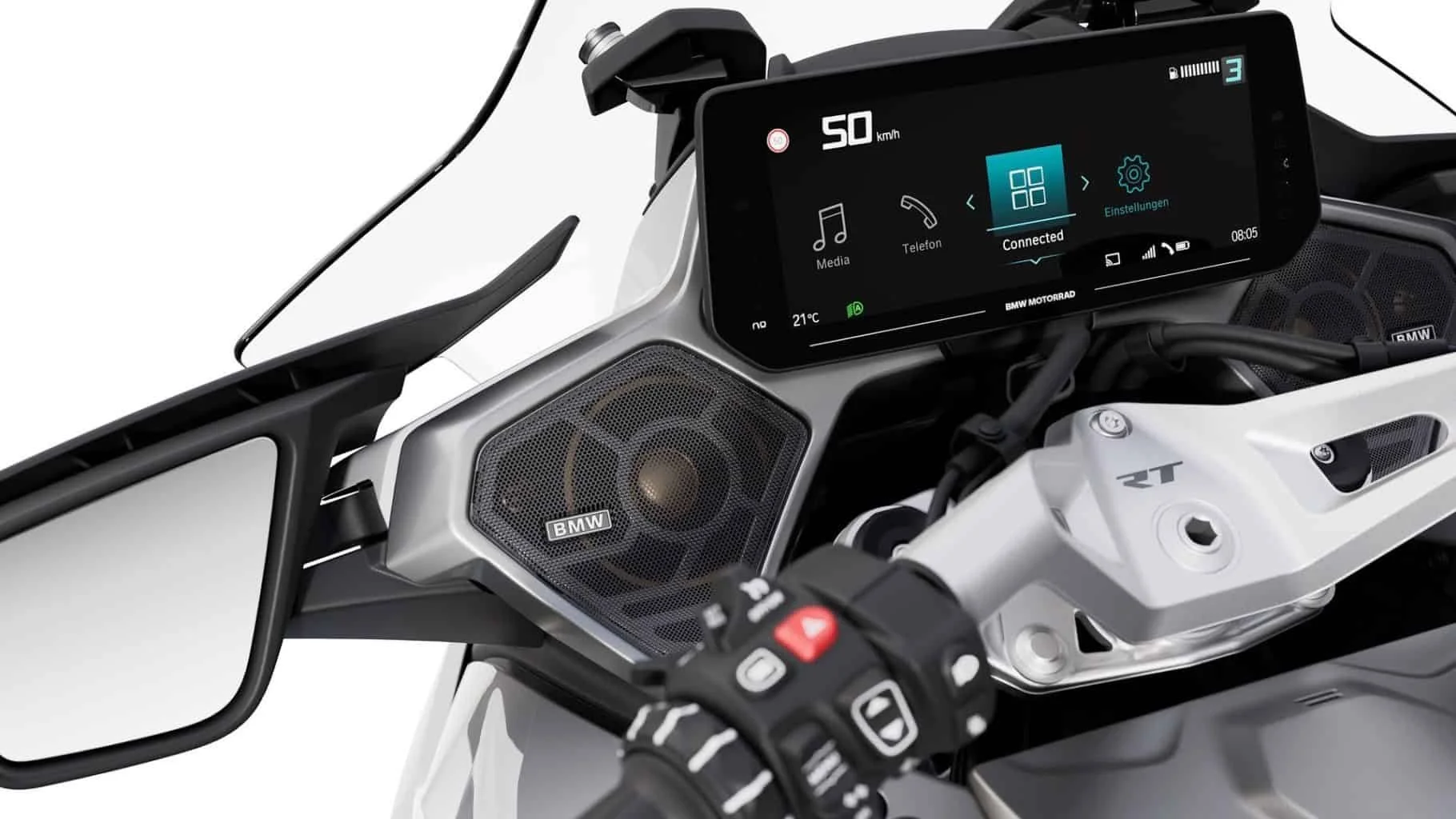
The RT is festooned with all manner of technology fit for a modern touring bike and doesn’t diverge significantly from the Motorrad’s other top-shelf machines. The 10.25-inch TFT color display is bright and legible in all conditions, and includes smartphone-mirrored navigation via the BMW Motorrad Connected App. The Riding Assistant suite adds comprehensive safety features, such as Active Cruise Control (ACC), Frontal Collision Warning (FCW), and Lane Change Warning—using radar and automated braking interventions to reduce the risk of accidents. Full LED lighting is standard, while the optional Headlight Pro adapts beam direction and intensity based on riding and load conditions. Audio options include an integrated system with HD radio, FM/AM bands, and an optional Audio Pro system for enhanced sound clarity at all speeds. I can report that the stereo works, in that I turned it on, heard sound coming from the twin speakers, then turned it off in favor of the cacophony of motorcycle sounds passing by (apologies to our audiophile readers for that pitiful review.)
Controls are accessed via thumb buttons and a rotary dial, which will be familiar to anyone who’s ridden a modern BMW motorcycle. It’s not my favorite system, but I appreciate the Motorrad’s consistency across platforms. One niggle: Would it kill BMW to backlight the buttons for nighttime riding?
As with other BMW touring bikes, the front and rear brakes are fully integrated. Pull the brake lever, you get both brakes. Push the rear brake pedal, you get both brakes. Pull the front lever and push the rear pedal…you get the idea. BMW explained this was due to the requirements of the ABS Pro system, along with its partner, Dynamic Brake Control, and various other electronic nannies needing control authority, but in short, you’ll get what you get in terms of stopping. According to the literature, there are evidently some conditions where the bike allows the rider to lock the rear wheel via the rear brake lever, but I didn’t discover that particular behavior in the real world. All that said, braking is impressive, linear, and sure-footed.
Modern Design and Touring Amenities
The design of the new R 1300 RT is distinctly modern, with an angular edginess that manages to avoid Stormtrooper parody. It’s a substantial bike, to be sure, but also manages the delicate balance of looking large but still tidy, not always easy when wrapping a body around a big boxer engine (looking at you, GS Adventure). Think of it as the NFL linebacker of motorcycles.
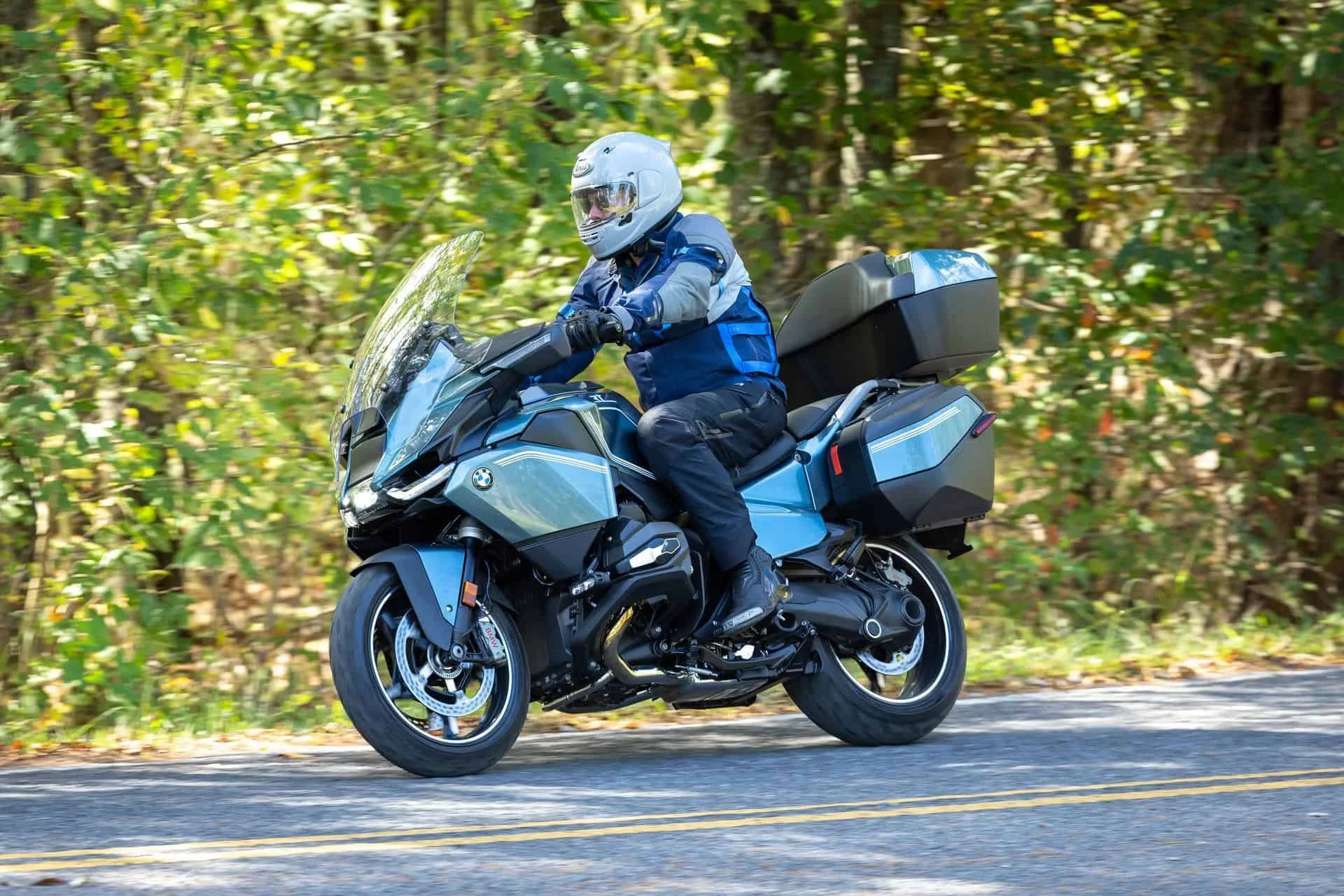
Multiple color options are available: Alpine White, Triple Black, Impulse Racing Blue Metallic, and the fetching Option 719 Camargue Blue Ridge Mountain Metallic, alongside premium features like hand-painted pinstriping, forged handlebars, and variable wind deflectors. As befitting BMW Motorrad’s product range, fit and finish is superb throughout.
A word on the windscreen: Spectacular. Electrically adjustable via a thumb switch, the zone of stillness when fully extended is almost unnerving, especially when paired with the side-panel deflectors. It’s the calmest experience I’ve ever had on a motorcycle, even at speeds within shouting distance of 100mph (for science, you understand). “Serenity now!” indeed.
Of course, the touring part of sport-touring implies carrying stuff over distances, and the standard luggage system consists of integrated 27-liter side cases (expandable to 33 liters via the Variable Luggage System). The removable top case swallows up to 54 liters and, when outfitted with the optional Comfort Passenger Package, includes heated seats, a heated backrest, and heated grips (though the controls for grip heat are somewhat infuriatingly buried in a menu rather than controlled with a dedicated button). It’s plush.
One component that does er on the side of sport rather than touring is the rider’s seat. After about 200 miles, my unmentionables got a tad numb, so the accessories catalog will likely be your friend if you plan on regularly rolling up the miles in the RT. It’s certainly not the plush Eames Lounge Chair saddle of BMW’s K 1600 GT. That said, the RT’s saddle is grippy and shaped to move around on a bit, so the sporting choice seems deliberate.
Technical Specifications and Pricing
Major specs for the 2026 BMW R 1300 RT include a wheelbase of 59 inches (slightly less than that of the R 1300 GSA), seat height options from 30.7 to 33.9 inches, and a total wet weight of 619.5 lbs (slightly heavier than a GSA’s 593 lbs; blame the built-in sidebags). Acceleration from 0 to 62 mph takes 3.6 seconds, with a top speed of 124 mph. The fuel tank capacity is 6.3 gallons (compared to the GSA’s 7.9-gallon tank). The bike has a starting MSRP of $22,495 plus destination fees, though you’ll likely inflate that price more than a bit after some quality time with the options list. You can ride away on my fully loaded test bike for just shy of $32,000.
BMW Motorrad Days America: The Circus Comes to Town
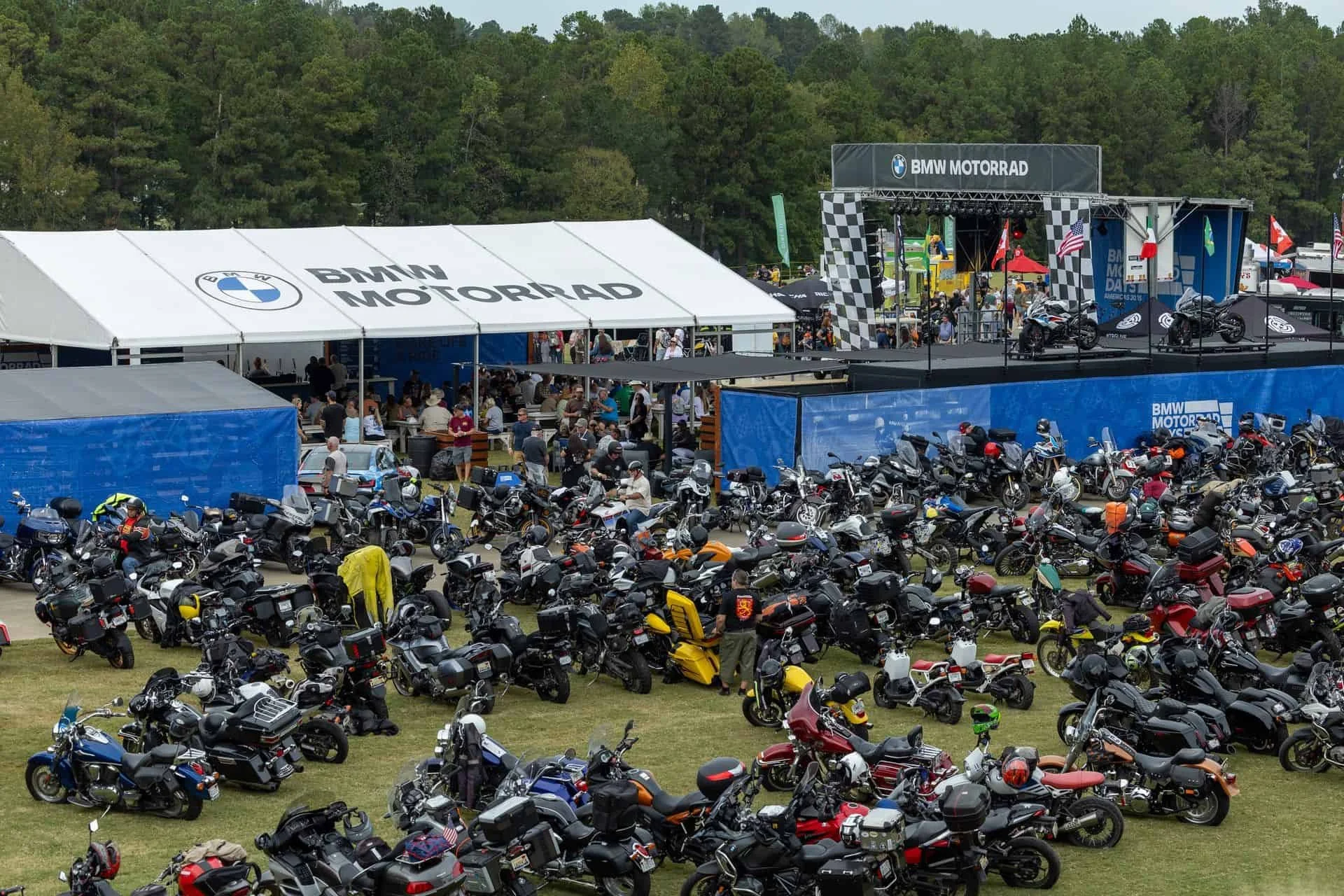
Ultimately, our band of riders arrived at BMW Motorrad Days America, held in conjunction with the Barber Vintage Festival. Motorrad Days brings together all-things BMW Motorrad, with literally every bike in the portfolio featured on static displays, many available for test riding by those patient enough to wait in line. Walking into a Motorrad dealer, even the largest, is one thing; but seeing the bikes lined up gleaming in the sun, surrounded by drooling onlookers, with knowledgeable product experts chatting up the curious and smitten is something else entirely.
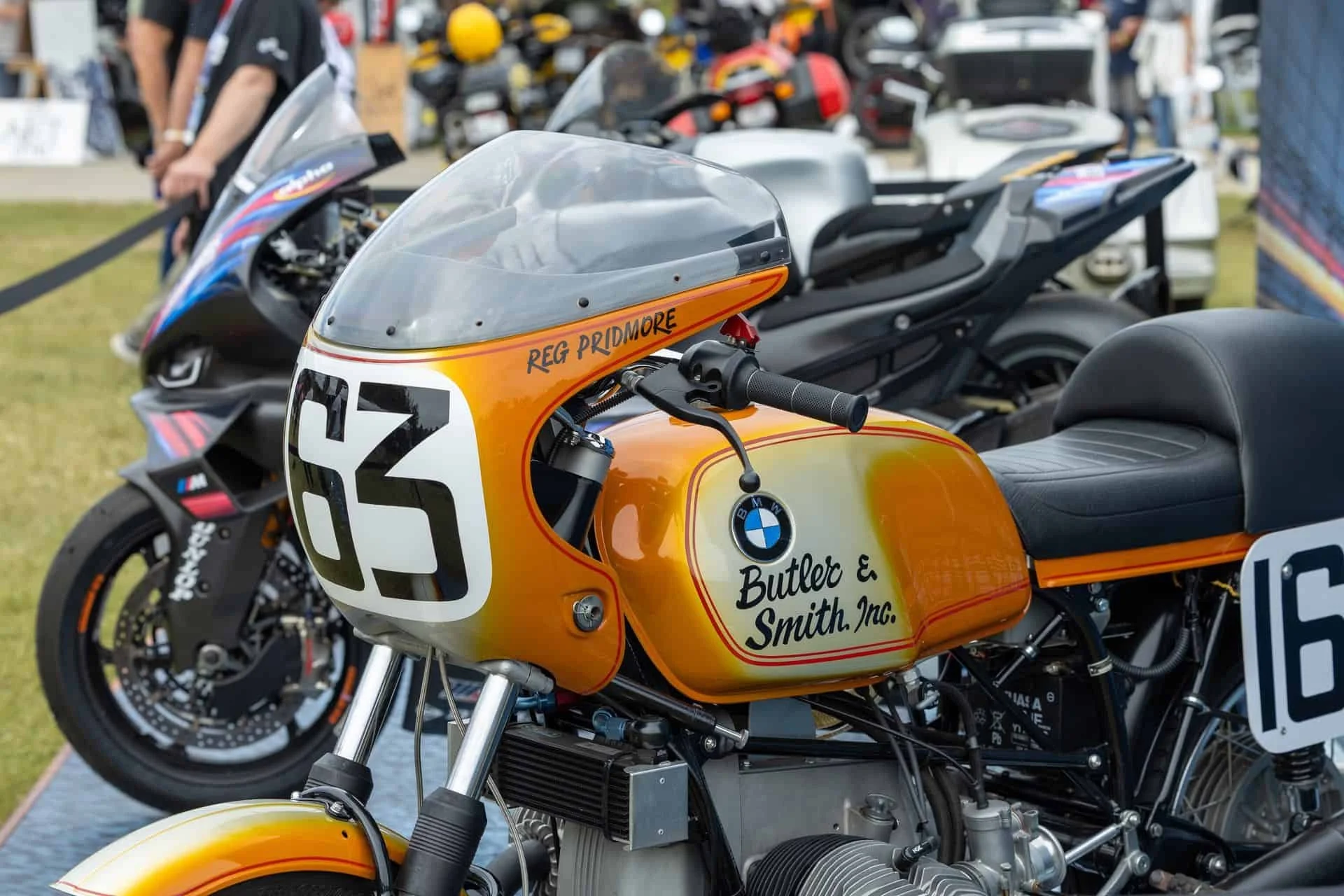
You name the bike, it was there, including the superb retro R12S with its electric-fade Lava Orange Metallic paint, and also the Concept RR Superbike, a preview of the S 1000 RR’s future, unveiled earlier this year as part of the prestigious Concorso d’Eleganza Villa d’Este at Lake Como. All of it was colored by the sounds of rockabilly from the stage and the demon squeal of stunt riders doing things that, if I tried them, would likely put my crash gear to good use. (It was also a treat to catch up with the folks from the BMW Performance Riding Center, on hand to promote their offerings.)
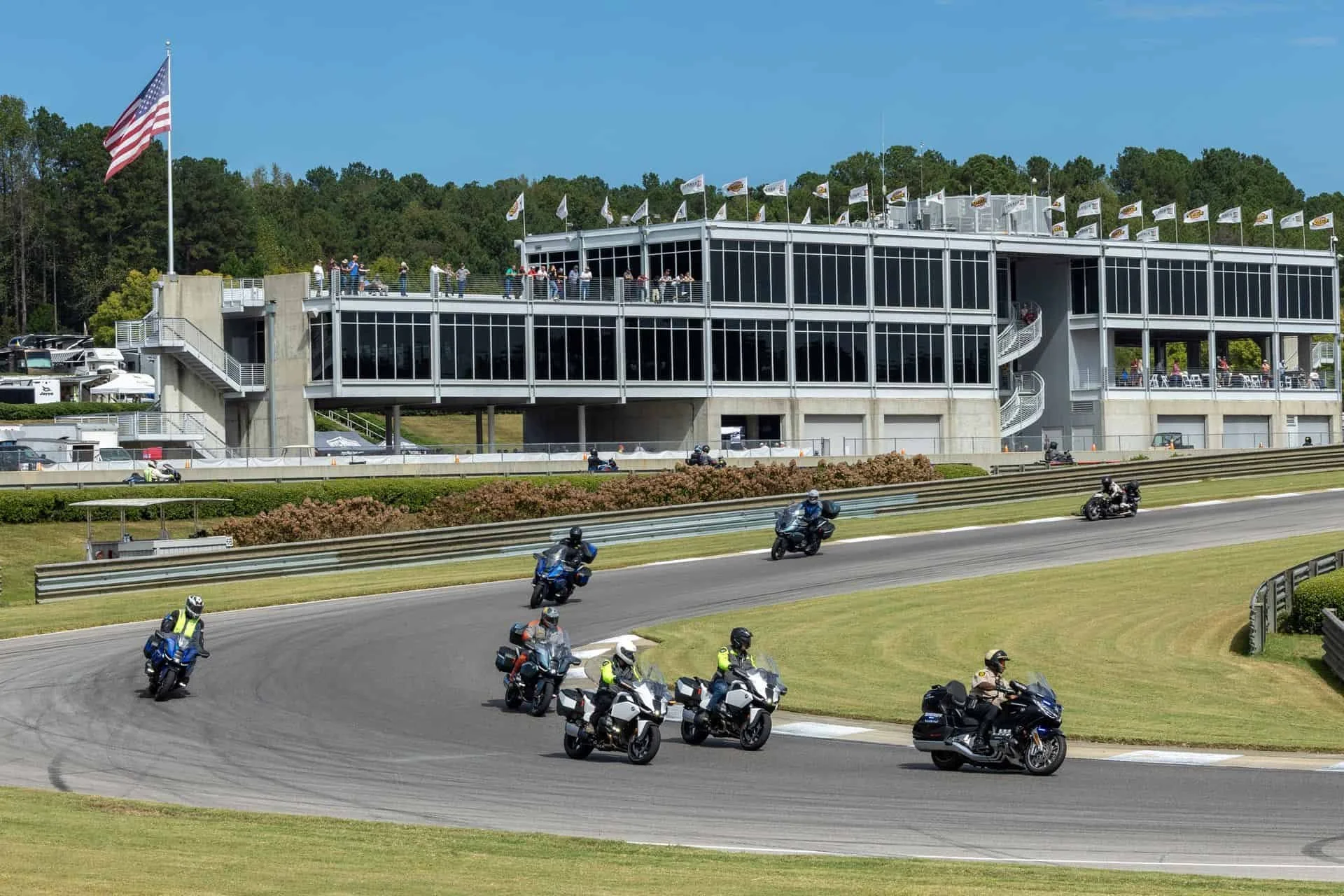
The Barber Vintage Festival itself is to motorcycles what the Pebble Beach Car Week is for cars, with vintage racing in many categories, events like Motorrad Days America and the Isle of Triumph, vendor displays aplenty, and the most fabulous motorcycle swap meet I’ve ever seen. And bikes of all sizes, shapes, and types literally everywhere. All built around the absolute glory that is the Barber Vintage Motorsports Museum, the largest collection of motorcycles anywhere in the world (with a smattering of cars as well, in particular the Lotus marque). Motorcycling would seem to be alive and well if the Barber Vintage is any indication.
The RT was, if not invisible, then somewhat lost in the crowd at The Vintage, though admittedly a dozen unreleased-model motorcycles with manufacturer plates all in a line will always draw curious glances, if not an actual crowd. The relative anonymity was punctured, however, by the handful of parade laps around the Barber racetrack itself, where our RTs lead a diverse pack of others on an exclusive group ride, including one leather-clad couple riding a riotous racing sidecar rig powered by a vintage BMW boxer motor. It spent the laps directly behind me, darting in and out of my mirrors, its throaty exhaust echoing off the Alabaman hillocks. Glorious.
The R 1300 RT: Almost a Throwback
In an era of increasing platform homogeneity, when ADV bikes want to be Tourers and Sport-Tourers want to be canyon carvers, brands look for ways to blend their component mixes to pour out differentiated products. So, it’s likely inevitable that some touring bikes become more sport-focused and some ADV bikes became more road-focused. If Ducati’s Multistrada V4 Pikes Peak can be one of the most competent pure road bikes on the market, why can’t the R 1300 RT take on an equally spirited sport personality while still providing comfort to roll away the miles? BMW has clearly gone in that direction with this new RT. It’s almost old-fashioned; a proper sport-touring bike, with smiles aplenty.


